 From the Woodlot
A Field Guide to One Peach Bottle: the Leaf, the Log and the Moss
Onnit's Alpha BRAIN Focus Shot prints seven names on its panel. I walked each one back to the leaf, the egg, the log or the moss it comes from, and set it beside the trial that measured it.

This is a paid advertisement. Sponsored by iHerb, LLC.

Leland Dorsey is the name this desk signs with, and the woods in this story are the ones behind the house where it is written.
What this page says about the bottle comes from the retailer's listing, the photographs of the carton on that listing and the maker's product page, all read in September 2026.
I have walked the same forty acres of ash, beech and oak for thirty-one years.
Most mornings I go out before the coffee is finished, with the rest of it in a steel cup.
In the pocket of my jacket there is always a field guide.
Not the same one every year, but always one, with a soft cover gone round at the corners.
A field guide does one thing, and it does it the same way every time.
It takes a name you have heard and tells you what the thing actually is, where it lives, and how to tell it from the thing that only looks like it.
This month a small peach bottle came into the house.
It is called the Alpha BRAIN Focus Shot, from Onnit, a company in Austin, Texas, and it is sold six to a carton.
I turned the carton over the way I turn over a leaf I don't know.
The back lists seven names, and I recognized some of them the way you recognize a bird call before you can say which bird.
Seven names on the back of a carton. Seven entries for the field guide.
Caffeine. Every man reading this has a cup of that somewhere near him.
L-theanine, which comes out of a tea leaf.
Citicoline, which the body makes from something in an egg yolk.
Lion's mane, which is a white mushroom I have seen on old beech trees in these woods.
Huperzine A, which comes from a club moss, a low green plant that grows on forest floors.
And two B vitamins, which come from the pasture, the pond and the potato bin.
So I did what I have always done with a new name: I wrote it an entry.
Where it grows or how it's made, how much of it a morning cup or an egg or a log would give you, how much of it is in the bottle, and what the one good study says.
It took me longer than I expected.
Some of the entries are short and plain, and one of them belongs at the pharmacy counter before it belongs anywhere near your breakfast.
What I found is a bottle with an honest dose of caffeine, two tea and egg entries at the dose of a small trial each, one mushroom at a thirteenth of its trial, and one moss line that acts on a body enzyme the way some daily medicines do.
None of that is a verdict on whether you should buy it.
It's a field guide, and a field guide doesn't tell you to pick anything.
Thirty-One Years of Field Guides, and the Five Questions Every Entry Answers
The first field guide I owned was a paperback about trees.
I bought it the spring after we moved here, because I was tired of calling everything with bark "a maple."
That book taught me something I didn't expect.
Most of the trouble in the woods comes from two things that look alike, and the whole job of an entry is to keep them apart.
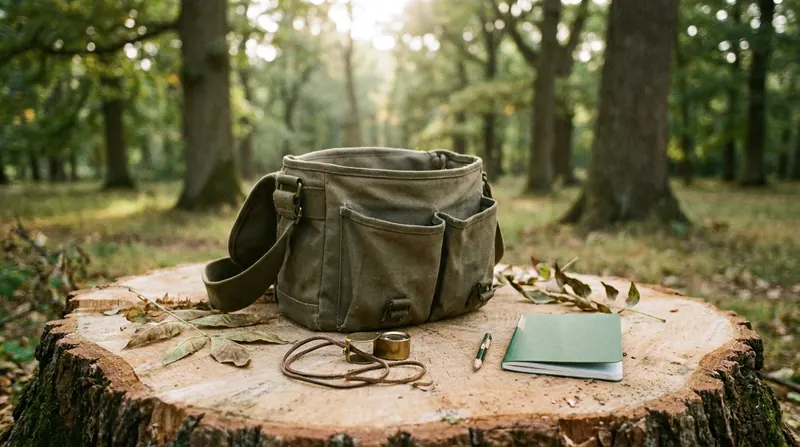
Over the years I've settled on five questions.
Every entry I write in my own notebook answers all five, whether it's a tree, a fern or a mushroom somebody hands me at the church supper.
- What is it, in plain words, and where does it come from?
- Where would a man ordinarily meet it, and in what amount?
- How much of it is in the thing in front of me?
- What did the best study of it actually measure, in whom, and at what dose?
- What does it get confused with, and when should you leave it alone?
The fifth question is the one people skip.
In the woods it's the one that keeps you out of trouble.
A man who knows morels can still pick the wrong morel.
A man who knows his coffee can still add a second cup's worth of caffeine without noticing.
So every entry on this page has a fifth line, and I have written it out every time, even when it's short.
I will also say what a field guide is not.
It isn't a recipe, it isn't a review, and it doesn't tell you what a plant will do for you.
A good guide tells you what the plant is and leaves the rest to you.
That is how I have read this carton, and that is how I will ask you to read this page.

One more thing about method, because it matters for everything below.
When I compare a dose in the bottle to a dose in a trial, I compare the same thing to the same thing, in the same kind of people, over the same length of time.
If the trial gave a man more than the bottle does, I say how much more.
If the trial was run on young people, or only on women, or for one morning, I say that too.
That is the whole method, and it's the only fair one I know.
It is the same method a field guide uses when it tells you a mushroom is edible only when it's young.
Entry One: Caffeine, Which Grows in a Coffee Cherry and a Tea Leaf
What it is. Caffeine is the most widely used stimulant in the world.
It grows in coffee, in tea, in cocoa, in yerba mate and in guarana, and it is the reason any of us bother to get up before the light.
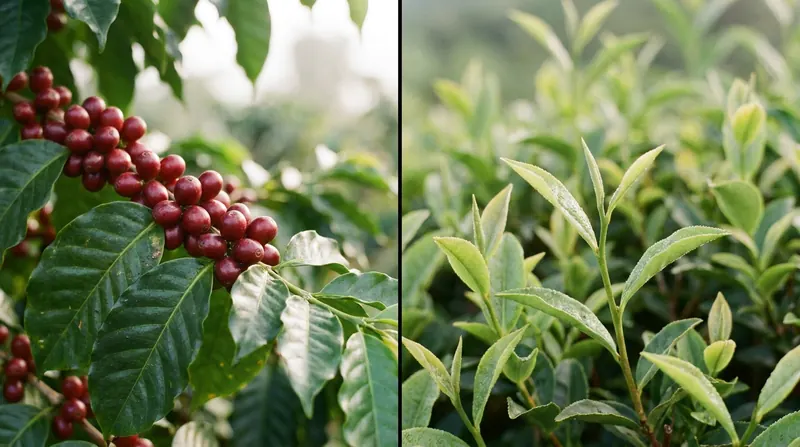
Where you already meet it. In the steel cup I carry into the woods.
A cup of brewed coffee holds roughly 80 to 100 milligrams, and a cup of tea roughly 30 to 50.
The Food and Drug Administration puts the range for a 12-ounce cup of brewed coffee wider, at 113 to 247 milligrams. [1]
That spread is the difference between a light pour and the pot my brother-in-law makes.
How much is in the bottle. Fifty milligrams.
The carton says so in the plainest sentence on it, and I'll quote it exactly: "It contains the same amount of caffeine as half a cup of coffee."
Half a cup of coffee, in a two-and-a-half-ounce bottle.
I respect a label that says that.
It puts the caffeine in the only unit every one of us already understands.

What the best evidence measured. The European Food Safety Authority looked at caffeine in 2015.
It concluded that single doses up to 200 milligrams and daily amounts up to 400 milligrams raise no concerns for healthy adults, and that caffeine in moderate doses makes people more alert and less sleepy. [2]
The Food and Drug Administration cites the same 400 milligrams a day, about two to three 12-ounce cups, as an amount not generally associated with negative effects in most healthy adults. [1]
That is the honest size of the claim.
Caffeine wakes you up. It is not a memory ingredient, and nobody who studies it says it is.
What it gets confused with. Nothing, really, except more of itself.
The trouble with caffeine is never the name on the label; it's the cups you forget to count.
If I drink my usual two mugs before nine, I'm somewhere around 200 milligrams already.
Add the bottle and I'm at 250, which is still well inside the government's figure, but it is not nothing.
When to leave it alone. The agency lists what too much can bring: a faster heartbeat, palpitations, jitters, an upset stomach, a headache and a disrupted night. [1]
It also says some people are more sensitive, and that anyone who takes medicines should talk with a health care provider.
The carton adds its own rule, and it's a good one.
Do not use it at bedtime.
My own rule is stricter: nothing with caffeine in it after noon, and this bottle counts as caffeine.
That isn't the label's rule, it's mine, and I would rather leave a wide margin than a narrow one.
Entry, in one line. Fifty milligrams of caffeine, the label's half cup, to be counted with the coffee you already drink, and kept to the morning.
Entry Two: L-Theanine, a Tea-Leaf Amino Acid First Named in 1949
What it is. L-theanine is an amino acid found almost only in tea leaves, and in a few mushrooms.
It is what gives green tea its savory, brothy taste, the taste some people call green and my wife calls "grassy."
It has been drunk for centuries, in every cup of tea poured in China and Japan.
It was isolated and given its name in Japan in 1949.
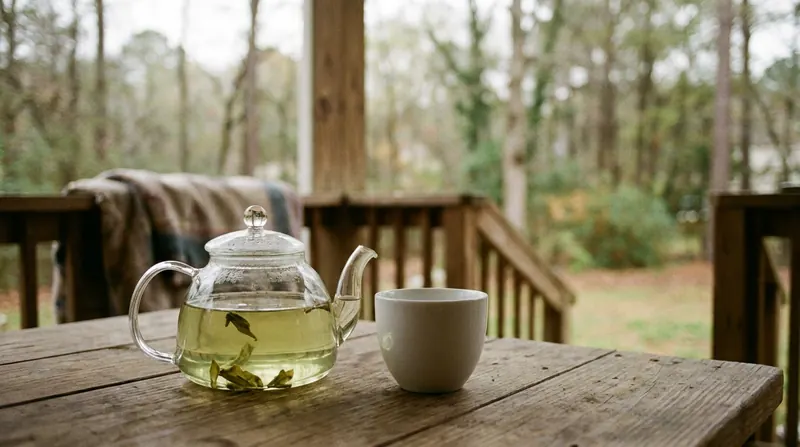
Where you already meet it. In a cup of green tea.
A brewed cup carries roughly 25 to 60 milligrams of theanine, depending on the leaf and how long it sits.
How much is in the bottle. The panel printed on the listing says 200 milligrams.
That is somewhere between three and eight cups of green tea, all at once, in two and a half ounces of peach.
I should say plainly where the bottle's theanine comes from, and the answer is that I don't know.
The label doesn't say, and a field guide doesn't guess.
The name began in a tea leaf. The label does not say where this batch began.
What the best evidence measured. The closest trial to the bottle's number is a small one from 2019.
Thirty healthy adults, nine men and twenty-one women with an average age of 48, took 200 milligrams a day for four weeks, and then a placebo for four weeks, or the other way around. [3]
After the theanine weeks they scored better on tests of verbal fluency and planning.
But against the placebo, the verbal-fluency gain showed up only in the half who started with lower scores, and two of the authors worked for the company that supplied the theanine.
There is also a study in men and women aged 50 to 69, which is closer to the age of most people reading this page. [4]
A single dose of theanine went with a faster reaction time on an attention task and with more right answers on a working-memory task.
The published summary of that second study doesn't say what dose was used.
So I can't set it beside the bottle's 200 milligrams, and I won't pretend I can.
Theanine at exactly the dose of a small four-week trial in adults around 48. A fair match on the number, on a small trial, with the supplier's own people among its authors.
What it gets confused with. The carton in the retailer's photographs prints a different theanine number, 100 milligrams, not 200.
I'll come back to that, because it isn't the only line that differs between the two.
When to leave it alone. Theanine is generally well tolerated in the trials.
If you are pregnant or nursing, or take anything daily, ask before adding any supplement, and the carton itself says not to use it while pregnant or nursing.
Entry, in one line. A tea-leaf amino acid at the dose of one small trial, with nothing on the label about where this particular batch came from.
The Two Tea-Leaf Entries Together, at One Small Study's Numbers
A field guide sometimes has a page for two plants that grow together.
Caffeine and theanine are like that, because they grow together in the same tea leaf.
There is one study that tested them together at a dose close to this bottle.
Twenty-seven healthy volunteers took 50 milligrams of caffeine with 100 milligrams of theanine, once, and came back a week later to take a placebo. [5]
An hour after the pair, they were faster and more accurate at switching between two tasks.
At an hour and at an hour and a half, they were less thrown off by distracting information in a memory task.
That is a real result, measured an hour and an hour and a half after one dose, in twenty-seven people.
It is not a result for weeks of mornings, and it wasn't this bottle.
The caffeine number in that study is the bottle's number exactly.
The theanine number matches the carton in the photographs, 100 milligrams, and is half the panel printed on the listing.
I find that a useful thing to know.
Whichever carton reaches you, the pair in it is close to the pair that was studied, for the hour after you drink it.
One study, twenty-seven people, one dose, and a result for the following hour. That is the whole of it, and it is more than most lines on most labels have.

Entry Three: Citicoline, Which the Body Makes From What Is in an Egg
What it is. Citicoline is not a plant at all.
It is a compound the body makes for itself, from choline and cytidine, on the way to building the thin walls around every cell.
It has been studied since the 1970s, and in some countries it is sold as a medicine.
The bottle carries a branded form called Cognizin, made by a Japanese company.
Where you already meet it. Not on your plate, exactly, but its raw material is there.
Choline is in eggs above all, and in milk, meat, fish and beans.
There is a long-running study of families in Framingham, Massachusetts, the children of the town's original heart-study volunteers.
In 1,391 adults aged 36 to 83, the ones whose diets carried more choline did better on tests of verbal and visual memory. [6]
That study measured choline from food, not from a supplement.
It found things that travel together, not a cause, and I would not stretch it one inch further than that.
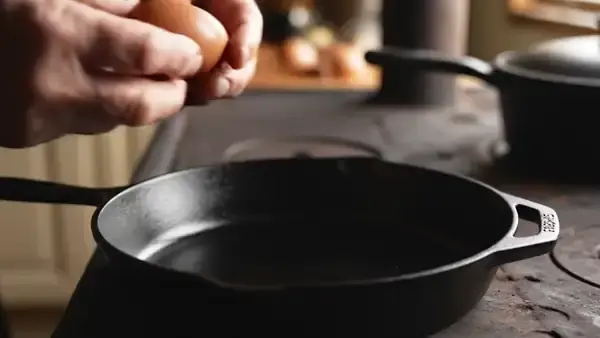
The egg on the stove is part of this entry. The study behind it was about the plate.
How much is in the bottle. Two hundred and fifty milligrams of citicoline.
That number turns out to be a useful one, because two trials used it or close to it.
What the best evidence measured. The first trial is a small one, in women.
Sixty healthy women aged 40 to 60 took 250 or 500 milligrams a day of Cognizin, or a placebo, for 28 days. [7]
The 250-milligram group made fewer errors on a computerized attention task than the placebo group.
Several of the authors were affiliated with the company that makes the ingredient, and that belongs in the entry.
The second trial is closer to our age and to the word on the carton.
One hundred healthy adults aged 50 to 85, who felt their memory had slipped with age, took 500 milligrams a day for twelve weeks, or a placebo. [8]
The citicoline group improved more on one test of memory, where you learn pairs of words and recall the partner.
Overall memory improved in both groups, which is a thing that happens in trials and a thing worth remembering.
Citicoline at the dose of a 28-day attention trial in women 40 to 60, and at half the dose of a twelve-week memory trial in adults 50 to 85. A reasonable entry, with the ingredient's maker on one of its papers.
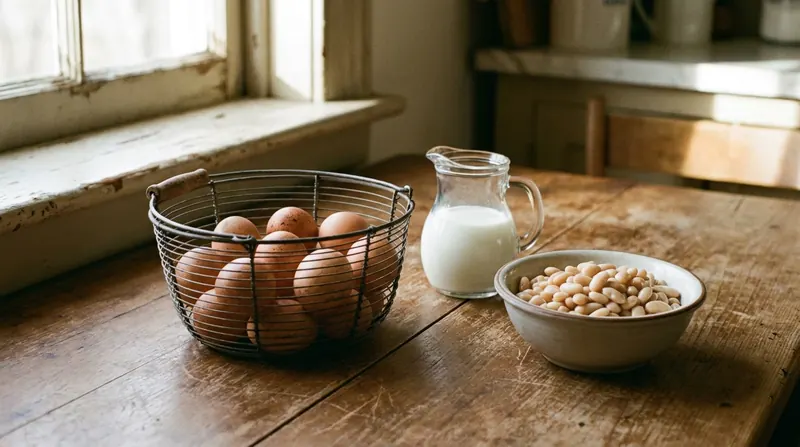
What it gets confused with. Choline itself.
Citicoline is made from choline, but the Framingham study was about choline in food, and the bottle's trials were about citicoline in a capsule.
They are relatives, not the same entry.
If you eat eggs, you are already getting the raw material, and nobody has tested whether the two add up.
When to leave it alone. In trials citicoline was well tolerated at 500 to 2,000 milligrams a day, with an occasional upset stomach or headache.
If you take a daily medicine, the pharmacist should see the carton, which is true of every entry on this page.
Entry, in one line. A compound the body already makes from what's in an egg, at the dose of one small attention trial and half of a memory trial.
Entry Four: Lion's Mane, the White Mushroom on Old Beech and Oak
What it is. Now we are back in the woods, where I'm most at home.
Lion's mane is an edible mushroom with long white spines that hang down like icicles, or like a beard, depending on who is describing it.
It grows on older beech and oak trees in temperate forests across the Northern Hemisphere.
In Japan it is called yamabushitake, and it has a long history as a food there, in China, and in Native American traditions.

Where you already meet it. At the market, sometimes, and in a good restaurant, where it's cooked in butter like a crab cake.
I have found it three times in thirty-one years on these forty acres, always on beech, always in the fall, and always a surprise.
You don't mistake it once you have seen it.
It looks like nothing else on a log, which is a rare and pleasant thing in a mushroom.

How much is in the bottle. Two hundred and fifty milligrams of the fruiting body, which is the part you see on the log.
A quarter of a gram, which is a small fraction of one mouthful of the cooked mushroom.
What the best evidence measured. The trial I would point you to is a Japanese one, and it's small.
Thirty-one healthy adults over 50 took a lion's mane fruiting-body preparation every day for twelve weeks, or a placebo. [9]
The lion's mane group scored higher on a standard mental-status test than the placebo group.
A test of visual memory in the same trial didn't change.
The dose in that trial was 3.2 grams a day.
The bottle carries 250 milligrams, which is about one-thirteenth of it.
One-thirteenth of the trial's dose. The mushroom is real; the amount is not the trial's.
There is a second study, of young adults aged 18 to 45, that used a single 1.8-gram dose. [10]
An hour later they were faster on a color-and-word task, while 28 days of the same supplement gave only a trend that didn't reach significance.
That study was run on younger people, at more than seven times the bottle's amount.
It belongs in the entry, but it doesn't bring the bottle any closer to a trial.
Lion's mane at about one-thirteenth of the 3.2 grams a day of its twelve-week trial in adults over 50. A real mushroom, and a real trial, at a dose this bottle does not reach.
What it gets confused with. Other white mushrooms on logs, if you are in the woods, which is why I never eat one I haven't identified twice.
On a label, the confusion is different: people read "lion's mane" and assume the trial's dose is in the bottle.
When to leave it alone. It's generally regarded as a food, and a few people in one study reported stomach discomfort, nausea or a rash.
If you are allergic to mushrooms, leave this entry and the bottle alone.
The Specimen on the Kitchen Table: Six Small Bottles of Peach
A field guide shows you the thing itself before it says anything more about it.
So here, with four entries written and three to go, is the thing itself.
What it is. A ready-to-drink bottle of peach-flavored liquid, sold as a dietary supplement.
There is also a tropical flavor, which I didn't read.
How you use it. The directions are short, and I'll give them in full.
Adults drink one bottle a day, shake it well, and serve it chilled.
Then two rules I would underline in any notebook.
Do not drink more than one bottle in twenty-four hours, and do not combine it with any other Alpha BRAIN product.
The maker's own page adds a line I liked.
It says particles may settle in the liquid, which is normal, and that is why the label says to shake it.
How to tell it apart. A field guide always gives you the marks that tell one thing from its neighbor.
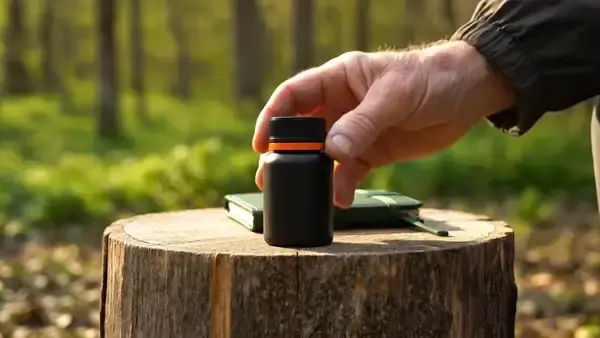
For this carton the marks are plain: black and orange, six bottles, 2.5 fluid ounces each, and the word peach on the front.
The listing adds two marks of its own.
It gave a best-by date of April 2027 on the day I read it, and it says the bottle has been on that retailer's shelf since June 2023.
The carton in the photographs gives the bottle as 75 milliliters, one more than the listing's 74.
That is the kind of small difference I note in the margin of a field guide and then leave alone.
Where to keep it. The label says serve chilled, so the six bottles belong in the refrigerator door.
I keep them on the same shelf as the eggs, which seemed right for a page where the egg has its own entry.
What it does not contain. No alcohol.
Five calories a bottle, about a gram of carbohydrate, and a sweetener called rebaudioside M, which comes from the stevia leaf.
The other ingredients are water, flavors, citric acid, L-malic acid and sodium citrate.
None of them needs an entry of its own.
When to leave it alone. The carton says to ask a clinician first if you have a health condition or take anything daily.
It says not to use it at bedtime, if pregnant or nursing, and to keep it out of reach of children.
A carton is six mornings.
That is short enough to be a fair test and long enough to learn what a bottle does to your own day.
That makes four of the seven entries, and one on the pair that grows in the same leaf.
Three more to go, and the first of them, the club moss, is the one I would ask you to read most slowly.
Entry Five: Huperzine A, From a Club Moss, and the Smallest Number on the Panel
What it is. Club mosses are old plants, older than the trees above them.
They grow low on the forest floor, in green upright tufts that look like tiny pine seedlings to a man who hasn't bent down to look.
The one on this panel is a Chinese club moss called Huperzia serrata.
From it comes a purified compound called huperzine A, isolated in the twentieth century.

Where you already meet it. You don't, and that is the first thing that sets this entry apart.
No cup, no egg and no log in this house has any huperzine A in it.
How much is in the bottle. The panel lists 10 milligrams of the club-moss extract, standardized to 1 percent huperzine A.
One percent of 10 milligrams is 0.1 milligrams, a tenth of a milligram, which is 100 micrograms.
The smallest number on the panel is the one that needs the most attention.
What it does. Huperzine A slows the enzyme that breaks down acetylcholine, one of the messengers nerve cells use to talk to each other.
That makes it an unusual entry in a supplement, because it acts on the body the way a medicine does, not the way a food does.
The maker says so in its own words, and it's the one mechanism on the whole panel I can check against a study.
Its page says the moss contains a compound that helps slow the breakdown of acetylcholine.

What the best evidence measured. One small study in healthy adults tested single doses of 100 and 200 micrograms, with twelve people in each group. [11]
Both doses slowed that enzyme, measured in the blood, so the compound does what the maker says it does to the enzyme.
The 200-microgram dose held recall steady across sessions.
Neither dose improved overall performance on the battery of tests.
The bottle's 100 micrograms is the lower of those two doses.
Most of the other research on this compound has been done in people with a diagnosed condition, and I don't cite it, because that isn't who this page is for.
A tenth of a milligram of a compound that slows a body enzyme: the lower dose of a single-dose study that found the enzyme change and no overall gain.
What it gets confused with. This is the important line, so I will say it slowly.
Some everyday medicines act on the same enzyme, some in the same direction and some in the opposite one.
I will not print a list, and you should not act on one from a page like this.
The right person to read this entry against your own medicine cabinet is your pharmacist.
So before the first bottle, put the carton in a bag with everything else you take daily, and take the bag to the pharmacy counter.
Ask one question: does anything here argue with the club-moss line?
When to leave it alone. Because it acts on acetylcholine, it can bring nausea, sweating, a slow heartbeat or muscle twitching.
It is not for pregnancy or nursing, and it's the reason the label says not to combine the bottle with any other Alpha BRAIN product: the capsules carry the same club moss.
Entry, in one line. A tenth of a milligram of a purified moss compound that acts on a body enzyme, to be shown to the pharmacist before anything else happens.
A Visit to the Pharmacy Counter, Written Up Like a Field Stop
In my notebook, a field stop is a place I go on purpose, with a question, and come back from with an answer written down.
The pharmacy counter is the first field stop for this carton, and I would make it before the first bottle, not after the third.
Here is how I would run it, because the way you ask decides the answer you get.
A pharmacist who is handed a carton and asked "is this all right?" has to guess what you take; one who is handed a bag has nothing to guess.
- Put the carton in a bag with every daily medicine, every vitamin and everything from the store shelf you take more than once a week.
- Point to the club-moss line and say the words on it: Huperzia serrata, standardized to huperzine A, a tenth of a milligram.
- Ask whether anything in the bag acts on the same enzyme, in either direction.
- Say how much coffee and tea you drink before noon, and add the bottle's 50 milligrams to it.
- Mention a multivitamin if you take one, so the B6 in both can be added up.
- If the carton that reaches you prints the older panel, point to its tyrosine and ashwagandha lines too, since those are two more names to check.
Write the answer down, in a line or two, the way you would write a sighting.
If the answer is "not with what you take," that is the end of this field guide for you, and it was worth the trip.
The best entry on this page is the one the pharmacist writes for you.
I have made that trip for less.
A man my age collects small bottles the way a woodpile collects beetles, and none of them is ever read against the others unless somebody sits down and does it.
The bag is the whole of it, and it costs nothing but a drive to town.
Everything else on this page can wait until the bag has been read.
Entries Six and Seven: B12 and B6, From the Pasture, the Pond and the Potato Bin
What they are. Two ordinary vitamins, both water-soluble, both on the panel of nearly every multivitamin sold in this country.
They are the least mysterious entries on the carton, and the least to do with the words on its front.
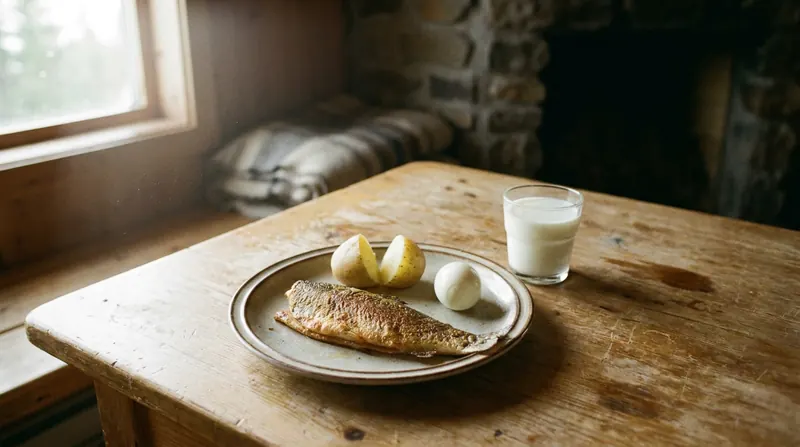
Where you already meet them. Vitamin B12 is found naturally only in animal foods: meat, fish, eggs and milk.
Vitamin B6 is in poultry, fish, potatoes, chickpeas and bananas.
How much is in the bottle. Five hundred micrograms of B12, printed as 20,833 percent of the daily value.
Five milligrams of B6, printed as 294 percent.
Those percentages look alarming until you know how B12 is absorbed.
The body takes it up through a two-step process in the stomach and gut that gets less efficient with age, and only a small share of a large dose is absorbed.
The National Institutes of Health's supplement office says between 3 and 43 percent of older adults living at home are short of B12, depending on how you define it. [12]
It also says there is no upper limit for B12, because it has so little potential to do harm.
A four-digit percentage is how B12 always looks on a label. It is not a cause for alarm by itself.
For B6, the same office sets an upper limit of 100 milligrams a day for adults. [13]
Harm to the nerves has been reported at far higher amounts taken for months, and the bottle's 5 milligrams is a twentieth of that ceiling.
What the best evidence measured. The largest review I know of pooled 14 trials in 27,882 adults with healthy thinking. [14]
It concluded that B-vitamin supplements probably have little or no effect on overall thinking for up to five years.
That review says nothing about men who are actually short of B12.
For them, the vitamin matters, and the way to find out is a blood test, not a bottle.
B12 at a dose that makes sense for older stomachs and does little for men who are not short of it, and B6 well under its ceiling. The two plainest entries on the panel.
When to leave them alone. If you already take a multivitamin, add its B6 to this one and keep the total well under 100 milligrams.
And if nobody has checked your B12 in a few years, that is a cheaper question than any carton, and a better one.
Two Editions of the Same Entry: the Carton in the Photographs Prints Another Panel
Every field guide I have owned has gone through editions.
The drawing of a fern changes, a range map moves north, and now and then a plant gets a new name.
This bottle has two editions on the same retailer's page.
The panel printed in the listing's text, which matches the maker's own product page, is the one I have used for every entry above.
The photographs of the carton on the very same listing show a different panel.
It is worth reading line by line, because it changes three of the entries.
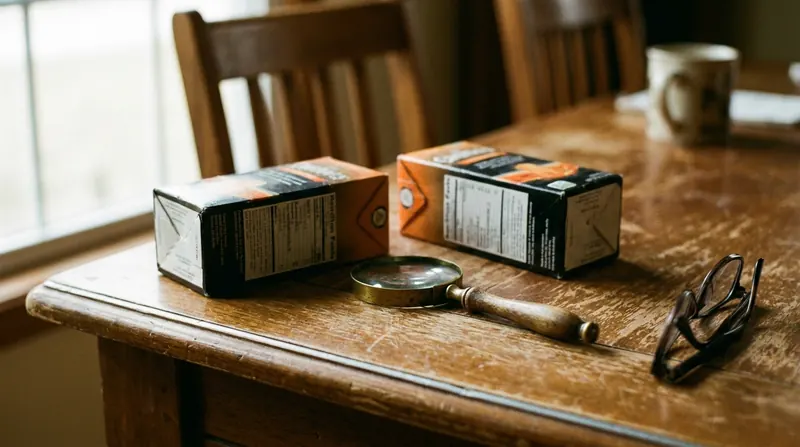
- N-acetyl L-tyrosine, 1,000 milligrams: not on the printed panel at all.
- An ashwagandha root extract, 300 milligrams: not on the printed panel either.
- L-theanine at 100 milligrams, not 200.
- Caffeine from a green tea extract, 50 milligrams, instead of caffeine anhydrous.
- Ten calories and 30 milligrams of sodium, sweetened with a stevia leaf extract, in a 75-milliliter bottle.
I can't tell you why the two panels differ, and neither the listing nor the maker's page says.
The most likely explanation is a change of recipe between an older carton and a newer one, but that is a guess, and a field guide doesn't print guesses.
What I can tell you is what to do about it: read the panel on the carton that reaches your door, and take that carton to the pharmacist.
Everything on this page is written for the printed panel, and I have noted the differences wherever they touch an entry.
Two panels for one product on one retailer's page, and one of them with two ingredients the other doesn't list. The carton in your hand is the edition that counts.
The Brand's Own Trial Was Run on Its Capsules, in Adults Under Thirty-Six
A careful guide tells you who wrote the description of a plant, and when.
So here is the one study with the brand's name on it, and who ran it.
I don't dismiss a company that pays for a trial of its own product.
Somebody has to, and most supplement companies never bother.
But that trial is an entry for the capsules.
Carrying it over to the bottle would be like carrying a range map from one fern to another because they share a genus.
A trial of the capsules is not a trial of the bottle. It is not even a trial of the same recipe.
The maker's own comparison table says something similar, in its own way.
It lists the bottle for focus and energy, and it puts memory beside the capsules, not beside the bottle.
The front of this carton says it supports memory and focus.
The back carries two more lines about how you feel, which my paper's advertising rules don't let me repeat, and the same carton carries the Food and Drug Administration's standard sentence that its claims haven't been evaluated.
The one trial with the brand's name tested capsules, for six weeks, in adults under thirty-six. Nobody has tested this bottle.
The Common Name on the Front, and the Latin Name on the Back
Every plant in a field guide has two names.
There is the common name, which is what your grandfather called it, and the Latin name, which is what it actually is.
Common names are friendly and they travel badly.
The same "bluebell" is three different flowers in three different states, and the same "cedar" in my county is not a cedar at all.
A carton works the same way.
The front is the common name: a brand, a flavor, and a line about memory and focus.
The back is the Latin name.
It says what is in the bottle, how much of each, and what the company is and isn't allowed to say about it.
I read the front last, the way I read the common name last.
By the time I got to "supports memory and focus," I had already written five entries, and only two of them sat at the dose of a trial on anything close to memory or focus.
That doesn't make the front untrue.
It makes it a common name, and a common name is never the whole entry.
Read the back of a carton the way you read the Latin name of a plant: it is the part that tells you what you are holding.
Fourteen Ratings, an Average of 4.4, and No Quotations
On the day I read the listing, the retailer showed fourteen ratings for this bottle, with an average of 4.4 stars.
Nine were five stars, four were four stars, and one was one star, and all fourteen carried the retailer's purchase mark.
I would have liked to quote some of them.
The store served the written reviews to me only in an automatic translation, so I have no buyer's words exactly as that buyer wrote them.
A field guide quotes a naturalist's words or doesn't quote them at all.
So you get the stars, the count and nothing more.
Fourteen ratings tell you how fourteen buyers felt about a cold peach drink with caffeine in it. They cannot tell you what the other six lines did.
The Cheaper Entries, Which Grow Closer to Home
Every field guide I own has a section near the back on the common plants.
The ones by the back door, the ones nobody photographs, the ones that turn out to matter more than the rare ones.
This page has a section like that too, and it costs nothing to read and very little to act on.
None of what follows is in the bottle.
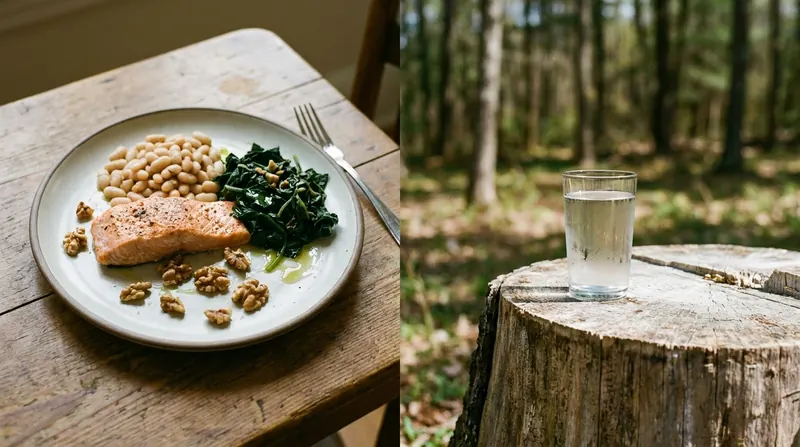
Water. The Berlin Aging Study followed 1,111 adults aged 60 to 89, and a third of them turned out to be short of water by a lab measure. [16]
Those who were short of water slipped more over time on a test of processing speed, and on how well they said they felt.
A review of eighteen studies in adults 60 and older found some, though sparse, evidence linking too little water to poorer scores on thinking tests. [17]
That is observational, and it is still more than most bottles can say.
I carry water into the woods now, as well as the coffee.
It was the cheapest change I ever made, and I made it after a hot August morning left me muddled on my own path.
The plate. The eating pattern most studied for memory is called MIND: leafy greens, berries, beans, nuts, whole grains, olive oil and fish.
In a three-year trial of 604 older adults, the group that ate that way and a group that simply ate a little less both improved their thinking scores, by about the same amount. [18]
That is an honest result, and I like it for its honesty.
It says the change of habit mattered, and the particular list mattered less than the headlines about it.
A large Brazilian study followed 10,775 adults aged 35 to 74 for about eight years. [19]
Those who ate more than the lowest quarter from the ultra-processed shelf, the packaged snacks and sweet cereals and processed meats, slipped faster on tests of thinking and planning.
The plate over years matters more than any one bottle in any one week.
The eggs, again. The Framingham families who ate more choline did better on tests of memory. [6]
That is the raw material of the citicoline entry, and it comes in a carton of twelve for less than a carton of six bottles.
The evening glass. In British civil servants followed for thirty years, heavier drinking went with shrinkage of the part of the brain most involved in forming memories, and with faster slipping on a word-fluency test. [20]
Light drinkers had no edge over men who didn't drink at all.
Less in the glass after supper is the cheapest entry in the whole guide, and one of the best studied.
It is also the one I find hardest, and I am not going to pretend otherwise.
The walk itself. I can't give you a trial for this one on this page, and I won't borrow one.
I can tell you that the forty acres have never once argued with anything in my medicine cabinet.
Walking is on every short list of habits worth keeping, in every plain-language booklet about getting older that I have ever read.
It asks for a pair of boots and a path, and most of us already own both.
Water, the plate, the eggs, the evening glass and the walk. None of them is in the bottle, and the first four have more behind them than most of its panel.
Six Things This Small Peach Bottle Is Not
Every entry in a good guide ends with what the plant is not.
Here is the same for the bottle, written as plainly as I can write it.
- It is not a medicine, and it is not meant for any health condition.
- It is not a memory ingredient in its caffeine line, which wakes you up and does nothing more that anyone has measured.
- It is not tested as this bottle: its brand's one trial was of capsules, in adults under thirty-six.
- It is not a lion's mane dose from any trial, at about a thirteenth of the one I cite.
- It is not something to combine with other Alpha BRAIN products, or to drink twice in twenty-four hours.
- It is not a reason to skip the pharmacist, because of its club-moss line.
If that list sounds severe, it isn't meant to.
It's just the line at the bottom of every entry, the one about what the plant only looks like.
A Six-Morning Field Season, If You Decide to Run One
In the woods, I keep a field season.
A few weeks when I go out to the same spot at the same hour and write down what I see, and nothing I don't.
A carton of this bottle is six mornings.
If you decide to try one, here is how I would run it, the way I'd run a season.
- Before the first bottle, the pharmacist sees the carton, because of the club-moss line.
- Keep the six bottles cold, and shake each one well before you open it.
- One bottle in the morning, never a second in the same twenty-four hours, never at bedtime.
- Count it as half a cup of coffee, and drink one half-cup less that morning if your mugs run large.
- Nothing with caffeine in it after noon, which is my rule, not the label's.
- Write down what happened that morning, not how you felt about it, in a few plain words.
- Keep the week before the carton written down too, so you have something to compare.
The last two lines are the ones that matter.
A man who starts watching his mornings closely will find that his mornings improve, and that is not the bottle, that is the watching.
One good morning proves nothing, in the woods or out of them.
Six written mornings beside six ordinary ones is the least a fair test needs, and it still won't tell you much about any one line of the panel.

There is one more thing a field season teaches, and I learned it the slow way.
The first week you write down everything, and by the third week you write down only what changed.
That is the right instinct, and it's the one to follow with a carton too.
If your six mornings look like the six before them, write that down plainly, because "nothing changed" is a finding, not a failure.
If one morning stands out, look at what else happened that day before you give the bottle the credit.
A good night, a cool morning, a walk before breakfast and a second cup of coffee all leave the same mark on a page.
Where it's sold. The bottle is sold by iHerb, LLC, a large online retailer at 17400 Laguna Canyon Road in Irvine, California.
It publishes a street address and a customer-support email, customersupport@iherb.com, and it takes help requests through its site rather than by telephone.
The retailer serves its listing by country, so the price you see depends on where you are and on the day.
That is why this page prints no price, and why returns and refunds follow the retailer's own posted policy, which is on its site.
Six mornings of peach, read entry by entry
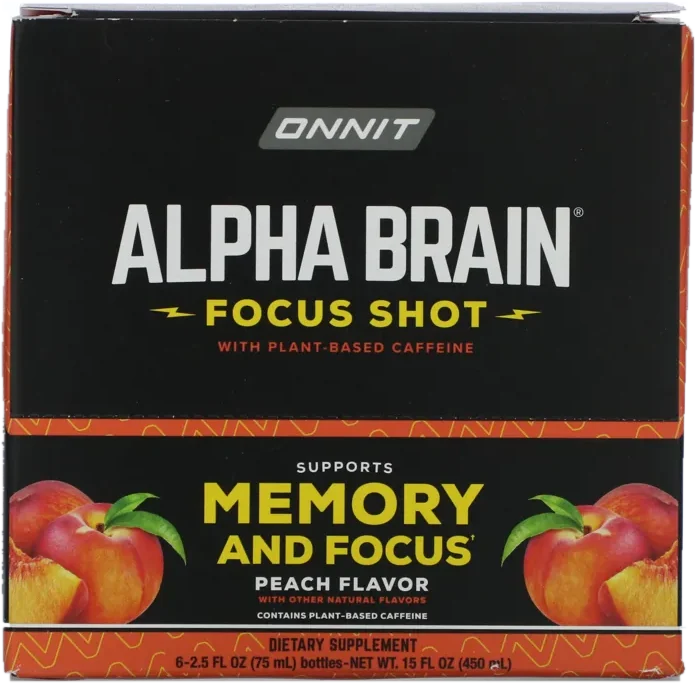
A 2.5-ounce peach bottle from Onnit of Austin, Texas: 50 milligrams of caffeine, 250 of citicoline, 250 of lion's mane, 200 of L-theanine and a tenth of a milligram of huperzine A, one bottle a day.
SEE THE SIX-BOTTLE CARTON'S LISTINGSold by iHerb, LLC, Irvine, California · made for Onnit Labs of Austin, Texas · six 2.5 fl oz bottles · 50 mg of caffeine each · one in 24 hours, never at bedtime · show the carton to your pharmacist first
Short answers from the edge of the woods
Is this a medicine?
No. It is a dietary supplement sold as a drink, and it is not meant for any health condition.
How much caffeine is in one bottle?
Fifty milligrams, which the label calls half a cup of coffee. The Food and Drug Administration cites 400 milligrams a day as an amount not generally associated with negative effects in most healthy adults. [1]
Why should the pharmacist see it first?
Because of the club-moss line, huperzine A, which slows the enzyme that breaks down acetylcholine. [11] Some everyday medicines act on the same enzyme.
Can I drink two on a long day?
No. The label says never more than one bottle in twenty-four hours, and never at bedtime.
Can I take it with the Alpha BRAIN capsules?
The label says not to combine it with any other Alpha BRAIN product. The capsules carry the same club moss.
Which panel is right?
The one on the carton you receive. The listing's text and the carton in its photographs print two different panels.
Where are the reviews?
Fourteen ratings on the retailer's listing, averaging 4.4 stars. The written reviews were served only in automatic translation, so we quote none.
The Whole Field Guide Entry, on One Card
If I had to fit this carton on a single index card in my field bag, this is what I would write.
- Caffeine, 50 milligrams: the label's half cup, counted with your coffee, kept to the morning.
- L-theanine, 200 milligrams: the dose of one small four-week trial; the older carton prints 100.
- The pair, caffeine and theanine: one study of twenty-seven people, one dose, a result for the next hour.
- Citicoline, 250 milligrams: an attention trial at that dose in women, a memory trial at twice it.
- Lion's mane, 250 milligrams: about a thirteenth of its twelve-week trial.
- Huperzine A, 0.1 milligrams: acts on a body enzyme; the pharmacist first.
- B12 and B6: plain vitamins, a blood test the better question for B12.
- Two editions of the panel: read the carton that reaches you.
- The brand's trial: capsules, adults under thirty-six, never this bottle.
- One bottle in twenty-four hours, shaken, cold, and never at bedtime.
The Last Walk of the Morning
I finished writing these entries on a cool morning at the end of September.
The ash leaves had started to turn, the way they do here, a little ahead of the beech and a long way ahead of the oak.

I have written a lot of entries in thirty-one years.
The ones I trust most are the short ones, where the name, the place and the amount all line up.
This bottle has a few of those.
The caffeine is exactly what the label says it is, and it says so in the plainest unit there is.
The theanine and the citicoline sit at the doses of small trials, with their suppliers' people among the authors, and I have said so.
The lion's mane is real and a long way short of its trial, and I have said that too.
A field guide is also honest about what it hasn't seen.
I haven't seen what this bottle does to anyone's memory, and neither has any study of it, because none has been run.
What I have seen is the label, the listing, the photographs and the trials, and I have written them down as fairly as I know how.
That is the only kind of entry I have ever trusted in thirty-one years, and it is the only kind I would hand to a neighbor.
And the club moss is the entry that made me slow down.
It's a tenth of a milligram of something that acts on the body the way a medicine does, and it belongs in front of a pharmacist before it belongs in anybody's morning.
A field guide doesn't tell you to pick anything. It tells you what you are looking at.
If you decide to try a carton, you now know what you're looking at, line by line, and what to ask before the first bottle.
If you decide not to, the water, the plate, the eggs and less in the evening glass are still there, and they cost less than any carton.
Either way, I hope you walk your own forty acres this fall, whatever they are.
Mine are out the back door, and the cup is getting cold.
The peach carton, with its seven entries and one question for the pharmacist
A 2.5-ounce peach bottle from Onnit of Austin, Texas: 50 milligrams of caffeine, 250 of citicoline, 250 of lion's mane, 200 of L-theanine and a tenth of a milligram of huperzine A, one bottle a day.
SEE THE SIX-BOTTLE CARTON'S LISTINGiHerb, LLC, 17400 Laguna Canyon Rd, Irvine, California · customer support by email · made for Onnit Labs of Austin, Texas · read the panel on the carton you receive
Every line of the panel, with its plain English name, its dose, the trial behind it and who paid for that trial, is written out in the ingredient and advertising guide linked at the foot of this page.
The guide also sets the two editions of the panel side by side and explains the club-moss line for the pharmacist.